
Your concern gives me a place to start.
Acne, sensitivity, uneven tone, dehydration, and changes in texture can overlap. Your skin barrier, inflammation, products, lifestyle, and treatment history can all shape what you’re seeing.
I look at the whole picture, and together we decide where to begin and what your skin may need next.
Acne and congestion
Breakouts aren’t something you can scrub away.
More exfoliation isn’t always the answer. Before I shape a plan, I look at the type and location of the breakouts, how much congestion there is, and how your skin is responding.
I also consider:
- Inflammation and sensitivity
- Your current products
- Hormonal or lifestyle patterns
- Picking or extraction history
- Pigmentation left after breakouts
- The condition of your skin barrier
Your session may include professional cleansing, controlled exfoliation, extractions when appropriate, calming techniques, and guidance for your home routine.
If congestion is extensive, I may work through extractions gradually. Trying to remove everything in one visit can compromise your skin.
I’m looking beyond what’s visible that day: understanding what may be contributing to the pattern and caring for your skin without adding unnecessary inflammation.
Rosacea, redness and sensitive skin
Skin that appears red or reactive is not always experiencing the same condition.
Sensitivity may be influenced by rosacea, a weakened barrier, overuse of active products, environmental exposure, recent procedures or another underlying factor.
Treatment begins by identifying what the skin can tolerate.
The protocol may focus on:
- Supporting the skin barrier.
- Reducing unnecessary stimulation.
- Restoring hydration.
- Calming visible discomfort.
- Identifying possible routine-related triggers.
- Introducing professional treatment gradually.
Rosacea cannot be diagnosed or cured by an esthetician. Clients with persistent, unexplained or worsening redness may be advised to seek evaluation from a dermatologist or medical provider.
Professional skin treatment can support the appearance and comfort of rosacea-prone skin, but it should never replace appropriate medical care.
Pigmentation and uneven tone
Discoloration can have different causes.
Sun exposure, inflammation, hormonal changes, acne, or a past injury can all leave pigment behind. The pattern matters, so I don’t approach every mark the same way.
Before I recommend a protocol, I look at:
- The appearance and pattern of the discoloration
- Whether inflammation is still active
- Recent sun exposure
- Your skin tone and tendency toward post-inflammatory pigmentation
- The exfoliating or brightening products you use
- Previous treatments
- Your daily sun protection habits
Progress is gradual. A plan may combine in-studio treatments, home care, and consistent sun protection. I work carefully to avoid irritation that could make discoloration more noticeable.
If a spot is new, changing, or unusual, please have a dermatologist check it before we treat it cosmetically.
Dehydration and a weakened skin barrier
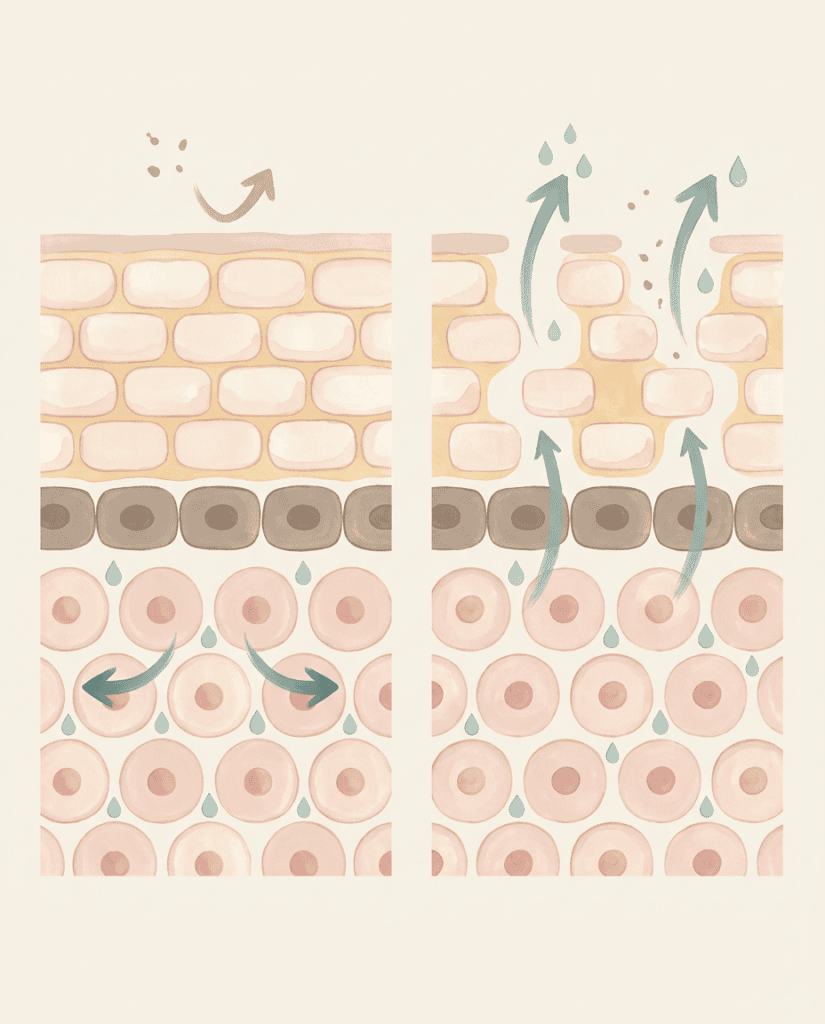
A healthy barrier helps hold moisture in. When it’s weakened, more water can escape.
Dehydrated skin lacks water. A weakened barrier can make it harder for skin to hold moisture and protect itself from irritants.
Your skin may feel tight, rough, sensitive, or uncomfortable. Products that once felt fine may start to sting. Some skin can also feel oily while dehydrated.
Things that can affect the barrier include:
- Too much exfoliation
- Overuse of retinoids or other active ingredients
- Harsh cleansing
- Environmental exposure
- Recent professional treatments
- A routine that isn’t right for your skin or is hard to maintain
When your skin needs support, I may simplify the routine, calm things down, and focus on restoring comfort before introducing more advanced treatments.
Restoring the barrier is not a pause in progress.
It is often what makes future progress possible.
Texture, pores, and congestion
Texture and visible pores are part of real skin. Congestion, oil, dehydration, sun exposure, changes in firmness, and your skin’s natural structure can all affect how noticeable they look.
Pores can’t be erased, but their appearance may soften when congestion is managed, hydration is supported, and your skin is treated consistently.
I look at what may be contributing, then choose what your skin is ready for. That may include professional exfoliation, extractions, barrier support, or an advanced treatment.
The goal is healthier, more refined skin that still looks like skin.
Pro-aging skin
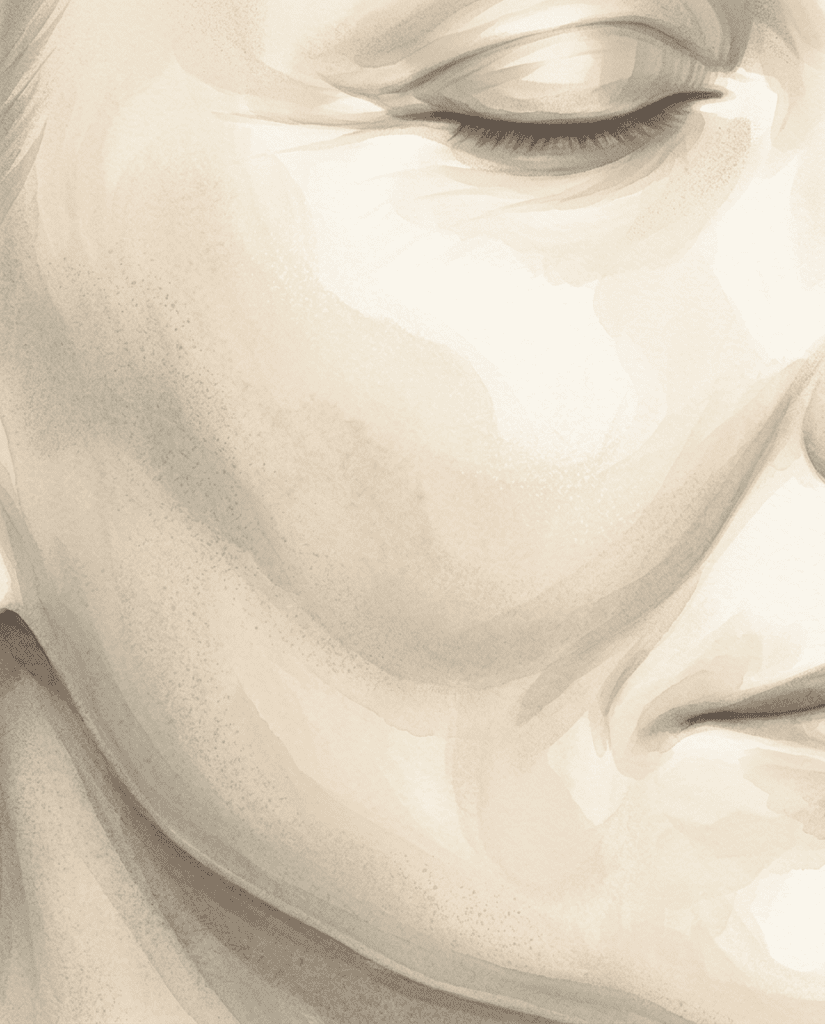
Skin changes over time. My approach is to support its health, comfort, and resilience at every stage.
I focus on what your skin needs now—from hydration and barrier support to addressing sun damage, texture, and collagen—choosing treatments thoughtfully and keeping results natural.
Caring for melanin-rich skin
Skin tone is part of how I plan a treatment. In melanin-rich skin, inflammation can leave dark marks, so I’m thoughtful about the products, techniques, and intensity I choose.
Before we begin, I consider your skin’s history, how it has responded to past treatments, and what it can comfortably tolerate. That helps me choose an approach that respects your skin and supports its health over time.
There is no one-size-fits-all protocol. I adjust the treatment to the person in front of me.
When it’s better to wait
Sometimes the right next step is to pause, adjust the plan, or get a medical opinion first.
I may postpone or decline a treatment if you have:
- An unexplained rash
- Open wounds or an active infection
- Significant swelling
- Severe irritation or sunburn
- A possible allergic reaction
- A suspicious or changing spot
- A concern that needs medical diagnosis
- A medication, pregnancy, surgery, or recent procedure that affects treatment safety
Your safety and your skin’s health come first. If needed, I may recommend an evaluation with a dermatologist or another qualified medical provider.
You don’t need to diagnose your skin.
If something on this page sounds familiar, tell me what you’ve been noticing. We’ll start with a conversation and a close look at your skin. From there, I’ll help you decide where to begin.